
English| EUR
Suggested for you
More currencies
Choose a language
The Jeddah Desert operates on a fixed daily schedule, but the desert's natural rhythms — sunrise, midday heat, and evening light — shape when tours deliver the best experience. Understanding both the operational window and thermal patterns ensures comfort and photography success.
Quick answer
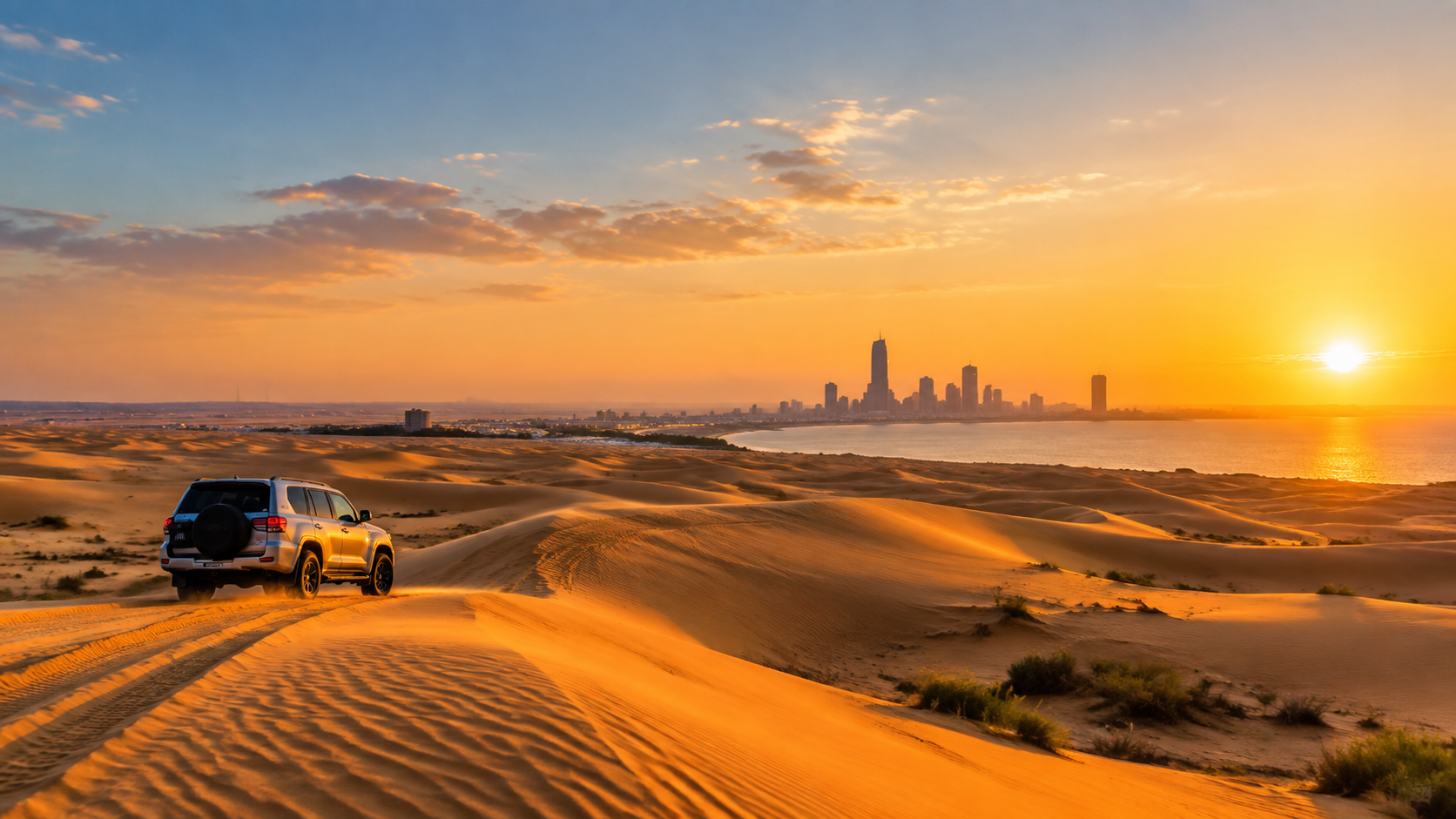
Desert safari operations in Jeddah run from 07:00 to 18:00 daily, seven days a week. The desert itself is accessible at any time within these hours, though most operators recommend arrivals between 07:00 and 16:00 to avoid midday heat extremes and capture optimal lighting during sunrise or late-afternoon golden hour. Entry to the desert is free; costs apply only to pre-booked tour services.
The Arabian Peninsula experiences some of the sharpest temperature swings on Earth — Jeddah's desert floor can shift 25°C between dawn and midday. Tour operators in the region open at 07:00 precisely because that first hour offers the only window when sand remains cool enough to walk barefoot and dune shadows stretch long enough for dramatic photography. By 10:00, surface temperatures exceed 50°C during summer months, rendering outdoor activity uncomfortable without full sun protection and hydration protocols. Operators structure their departure slots around thermal zones rather than arbitrary time blocks. Morning convoys leave between 07:00 and 09:00, targeting the pre-heat window when wind patterns stay calm and wildlife activity peaks near water sources. Afternoon departures cluster between 15:00 and 16:00, positioned to reach prime viewpoints as the sun drops toward the horizon and the desert's color palette shifts from bleached beige to amber and rust. The 18:00 closure aligns with civil twilight — the moment when natural light drops below safe navigation thresholds for off-road vehicles navigating unmarked dune fields. Seasonal variation affects comfort more than access. Winter months between November and February allow flexible scheduling since daytime highs rarely exceed 28°C, making midday departures viable for visitors prioritizing schedule convenience over golden-hour aesthetics. Summer operates under different physics — June through September sees midday ground temperatures approach 65°C, compressing all activity into early-morning and late-afternoon slots. Tour providers during these months often pause operations entirely between 11:00 and 15:00, resuming only when shade temperatures drop below 42°C. The desert's operational rhythm also follows weekly patterns shaped by regional customs. Friday mornings see reduced convoy traffic as local operators prioritize family schedules, making it the quietest window for visitors seeking solitude on popular dune crests. Weekday mornings between Tuesday and Thursday typically offer the most reliable availability for last-minute bookings, while weekend afternoons attract the highest concentration of photography-focused groups chasing sunset compositions. The 07:00 opening remains constant year-round, but the practical usability of that first hour shifts dramatically with the seasons — a February dawn at 07:00 means working in near-darkness, while an August sunrise floods the dunes with usable light by 06:30.
“The Arabian Peninsula experiences some of the sharpest temperature swings on Earth — Jeddah's desert floor can shift 25°C between dawn and midday.”
Access to the Jeddah Desert is provided at no cost for general visitors. Fees are only applicable when engaging pre-booked tour operators for guided safari experiences.
Prepare these essentials before heading into the desert during operating hours.
Everything you need to know about desert safari timings